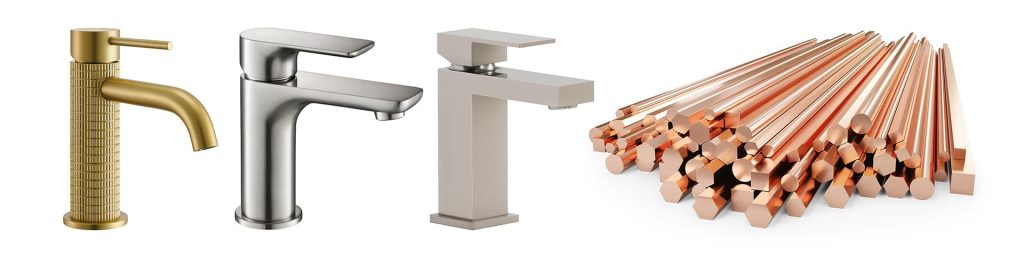
Why Lead Free Brass Matters for Faucets and Shower Systems
2025-11-29

Lead-Free Brass for Bathroom Faucet And Shower System Information Guide
"Lead-Free Brass" has become an important standard in the plumbing industry since more and more people pay attention to drinking water safety.
There are still more than 6 million lead-containing water plumbs in operated for the city water supply system in North America. Many water supply systems in Europe have been in use for decades or even centuries. Related authorities in various countries are pushing forward new regulations requiring "Lead-Free Brass". But does "Lead-Free Brass" mean it contains absolutely no lead?
For sanitary ware manufacturers, engineering contractors and product purchasers, understanding relevant regulations and certification standards is critical. This article will explain it to you:
What Lead-Free Brass Really Means
NSF 61 and NSF 372 standard requirements
cUPC and WaterMark certification system
Impact of aging global water pipe infrastructure on markets
"Lead-Free Brass" has become an important standard in the plumbing industry since more and more people pay attention to drinking water safety.
There are still more than 6 million lead-containing water plumbs in operated for the city water supply system in North America. Many water supply systems in Europe have been in use for decades or even centuries. Related authorities in various countries are pushing forward new regulations requiring "Lead-Free Brass". But does "Lead-Free Brass" mean it contains absolutely no lead?
For sanitary ware manufacturers, engineering contractors and product purchasers, understanding relevant regulations and certification standards is critical. This article will explain it to you:
What Lead-Free Brass Really Means
NSF 61 and NSF 372 standard requirements
cUPC and WaterMark certification system
Impact of aging global water pipe infrastructure on markets
I. The Meaning of "Lead-free Brass"
"Lead-free" does not mean completely free of lead.
According to Section 1417 of the U.S. Safe Drinking Water Act and specified in the NSF/ANSI/CAN 372 standard:
The weighted average lead content in materials that come into contact with drinking water must not exceed 0.25%.
This definition is a commonly used standard in the global plumbing industry.
This 0.25% limit is based on extensive scientific research. Research shows that within this content range, the material will not release harmful concentrations of lead into drinking water, while still meeting the manufacturing needs of complex parts such as valves and joints.
II. What is "Weighted Average Lead Content"?
"Weighted average" is an important concept in lead-free standards.
When calculating lead content, it's not simply an average of all parts, but rather a weighted calculation based on the proportion of the surface area in contact with water.
This means:
Components with larger water contact areas
have a greater impact on the final lead content calculation.
This calculation method more accurately reflects the material's impact on drinking water safety.
| Standard | Lead Limit | Application |
| NSF/ANSI/CAN 372 | ≤0.25% weighted average | Material composition verification |
| NSF/ANSI/CAN 61 | ≤15 μg/L leachate | Performance testing (leaching) |
| EPA Action Level | 15 ppb in tap water | Municipal water system monitoring |
III. Lead-Free Brass Becoming More and More Important
The improvement of production techinology is one of reason of the widespread adoption. The aging of global water supply infrastructure is anothersignificant reason.
There are many water supply networks were built 50 to 100 years ago in many cities. Over time, these supply pipes age, posing a range of risks.
Problems Caused by Aging Water Supply Systems
Old pipes can pose several safety hazards:
Chemical Contamination
Corrosive water can cause lead to leach from old pipes, solder, or brass components.
Microbial Contamination
Pipes used for a long time are prone to biofilm formation and can breed bacteria.
Structural Aging
Over time, the probability of pipe ruptures and leaks increases significantly.
Huge Costs of Infrastructure Replacement
Completely replacing lead-containing water supply pipes requires enormous funding.
Since comprehensive infrastructure replacement takes decades, governments have adopted a more realistic strategy:
requiring end products to use lead-free materials.
This includes:
Faucets
Mixing valves
Shower systems
Pipe fittings
Using certified materials in end devices provides users with additional safety assurance during the gradual upgrading of infrastructure.
In the international plumbing market, lead-free materials typically require multiple certifications.
NSF/ANSI/CAN 61
NSF 61 primarily tests whether a product releases harmful substances into the water during use.
Testing methods typically include:
Contacting the product with water in a controlled environment
Analyzing the chemical content in the water
Comparing with health and safety standards
This standard focuses on product performance.
In drinking water systems, common lead-free materials include lead-free brass and stainless steel.
Advantages of Stainless Steel
Stainless steel performs better in certain extreme environments, such as:
Highly corrosive environments
High-pressure industrial systems
Special chemical environments
However, stainless steel products are generally more expensive to manufacture.
Obtaining a lead-free certification typically involves multiple testing stages:
Material screening (XRF testing)
Precise component analysis (ICP-MS testing)
Leaching test
Product performance testing
Factory quality audit
Certification bodies also conduct unscheduled factory inspections and market spot checks to ensure products consistently meet standards.
Lead-free brass is not a marketing concept, but an industry standard established through strict regulations and scientific research.
Through certification systems such as NSF 61, NSF 372, cUPC, and WaterMark, the global plumbing industry continues to improve drinking water safety standards.
As infrastructure gradually upgrades, lead-free materials will continue to play an important role for many years to come.
For manufacturers, obtaining these certifications is essential for accessing international markets. For buyers and consumers, choosing certified products is an important step in ensuring the safety of drinking water.
IV. Policy Solutions: Use of Lead-Free Materials
Since comprehensive infrastructure replacement takes decades, governments have adopted a more realistic strategy:
requiring end products to use lead-free materials.
This includes:
Faucets
Mixing valves
Shower systems
Pipe fittings
Using certified materials in end devices provides users with additional safety assurance during the gradual upgrading of infrastructure.
V. Key Certification Standards Analysis
In the international plumbing market, lead-free materials typically require multiple certifications.
NSF/ANSI/CAN 61
NSF 61 primarily tests whether a product releases harmful substances into the water during use.
Testing methods typically include:
Contacting the product with water in a controlled environment
Analyzing the chemical content in the water
Comparing with health and safety standards
This standard focuses on product performance.
NSF/ANSI/CAN 372
NSF 372 verifies the lead content of the material itself.
Testing methods include:
XRF (X-ray Fluorescence Analysis)
ICP-MS (Inductively Coupled Plasma Mass Spectrometry)
This certification primarily focuses on material composition.
In the North American market, drinking water-related products typically need to meet both NSF 61 and NSF 372.
NSF 372 verifies the lead content of the material itself.
Testing methods include:
XRF (X-ray Fluorescence Analysis)
ICP-MS (Inductively Coupled Plasma Mass Spectrometry)
This certification primarily focuses on material composition.
In the North American market, drinking water-related products typically need to meet both NSF 61 and NSF 372.
CUPC Certification
CUPC is a certification issued by IAPMO, representing that the product complies with plumbing regulations in the United States and Canada.
Obtaining cUPC certification typically requires:
Meeting NSF 61
Meeting NSF 372
Passing additional performance tests
CUPC is one of the most important certifications for manufacturers entering the North American market.
CUPC is a certification issued by IAPMO, representing that the product complies with plumbing regulations in the United States and Canada.
Obtaining cUPC certification typically requires:
Meeting NSF 61
Meeting NSF 372
Passing additional performance tests
CUPC is one of the most important certifications for manufacturers entering the North American market.
WaterMark Certification
WaterMark is a mandatory certification in the Australian and New Zealand markets.
This certification is administered by the Australian Building Code Board (ABCB) and mainly includes:
AS/NZS 4020 chemical safety testing
Product performance testing
Factory quality audits
All products that come into contact with drinking water must obtain WaterMark certification to be sold in these markets.
WaterMark is a mandatory certification in the Australian and New Zealand markets.
This certification is administered by the Australian Building Code Board (ABCB) and mainly includes:
AS/NZS 4020 chemical safety testing
Product performance testing
Factory quality audits
All products that come into contact with drinking water must obtain WaterMark certification to be sold in these markets.
VI. Lead-Free Brass vs. Stainless Steel
In drinking water systems, common lead-free materials include lead-free brass and stainless steel.
Advantages of Lead-Free Brass
Lead-free brass is widely used in the plumbing industry. Its advantages include:
Good machinability
Mature manufacturing processes
Good corrosion resistance
Relatively low cost
Therefore, most faucets, mixing valves, and valves are made of lead-free brass.
Lead-free brass is widely used in the plumbing industry. Its advantages include:
Good machinability
Mature manufacturing processes
Good corrosion resistance
Relatively low cost
Therefore, most faucets, mixing valves, and valves are made of lead-free brass.
Advantages of Stainless Steel
Stainless steel performs better in certain extreme environments, such as:
Highly corrosive environments
High-pressure industrial systems
Special chemical environments
However, stainless steel products are generally more expensive to manufacture.
VII. Testing Items for Lead-Free Products
Obtaining a lead-free certification typically involves multiple testing stages:
Material screening (XRF testing)
Precise component analysis (ICP-MS testing)
Leaching test
Product performance testing
Factory quality audit
Certification bodies also conduct unscheduled factory inspections and market spot checks to ensure products consistently meet standards.
Conclusion
Lead-free brass is not a marketing concept, but an industry standard established through strict regulations and scientific research.
Through certification systems such as NSF 61, NSF 372, cUPC, and WaterMark, the global plumbing industry continues to improve drinking water safety standards.
As infrastructure gradually upgrades, lead-free materials will continue to play an important role for many years to come.
For manufacturers, obtaining these certifications is essential for accessing international markets. For buyers and consumers, choosing certified products is an important step in ensuring the safety of drinking water.
Water Pressure And Flow Standards For Hand Showers and Overhead Showers In Different Countries
Installation And Maintenance Tips for Concealed Shower System