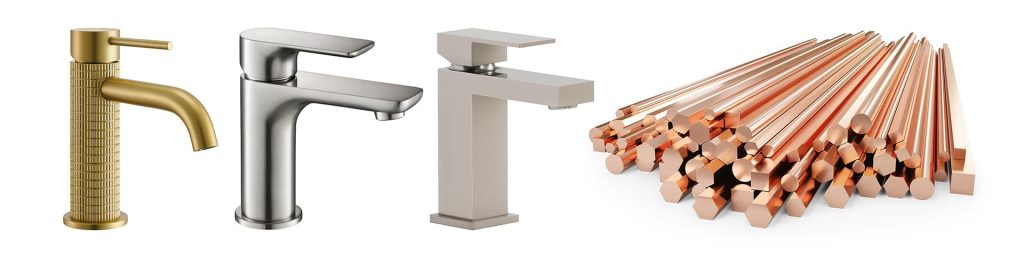
Key Functional Components in Faucets and Showers Aerators Flow Regulators and Check Valves Explained
2025-07-03
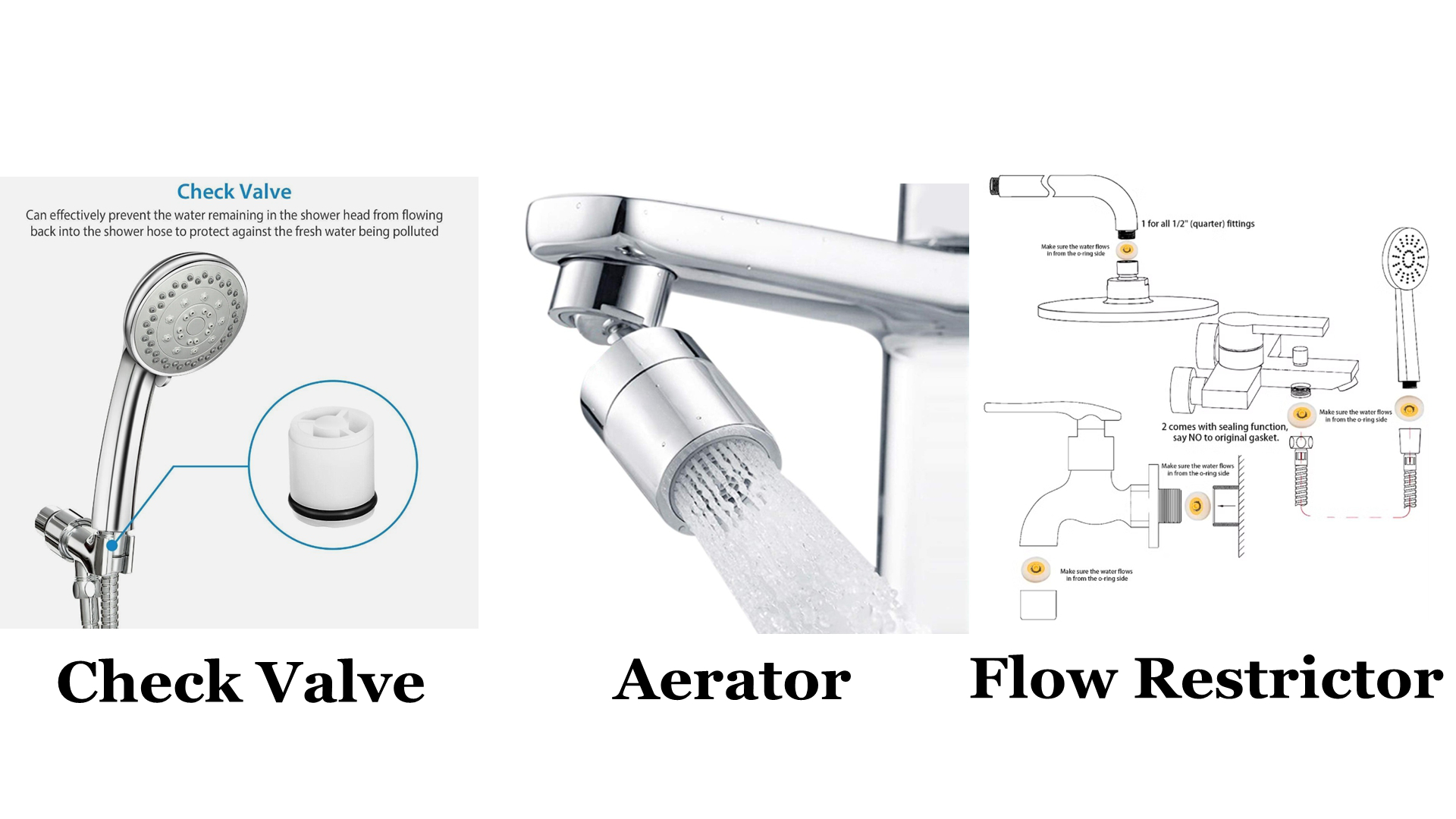
In basin faucets and shower products, what truly determines the user experience and performance is often not the appearance, but the key functional components hidden inside. For example, aerators, water-saving discs, and check valves—these seemingly insignificant parts actually directly affect water flow, water-saving performance, water quality safety, and system stability.
This article will systematically analyze these core components from the perspectives of function, structure, materials, and applications.
This article will systematically analyze these core components from the perspectives of function, structure, materials, and applications.
I. Aerator


1. Function and Purpose
The aerator is a nessary component installed in the spout of facuet or bath spout.
Main Functions:
Mixes water and air to create a gentle water flow.
Reduces splashing and improves user comfort.
Saves water while maintaining a good user experience.
2. Working Principle
When water flows through the aerator's multi-layered structure (mesh + mixing chamber):
The water flow is cut and dispersed.
Air is drawn in and mixed.
This ultimately forms a "foamed water flow."
3. Common Types
Standard Aerator (Standard Flow Rate)
Water-Saving Aerator (Low Flow Rate Design)
Anti-Clogging Aerator (with Filter Structure)
Adjustable Aerator (Angle/Mode Adjustable)
4. Common Materials
Shelf: brass/ stainless steel
Internal Structure: POM / Stainless Steel Mesh
Shelf: brass/ stainless steel
Internal Structure: POM / Stainless Steel Mesh
5. Key Parameters
Flow Rate (e.g., 4L/min, 6L/min)
Thread Specification (M24, M22, etc.)
II. Flow Regulator/Flow Restrictor

1. Function and Role
Flow regulators are primarily used for precise control of water flow and are widely used inside faucets and showerheads.
Core Functions:
Limit maximum flow rate
Ensure water-saving standards are met
Stabilize flow rate under different water pressures
2. Working Principle
Flow regulators are typically elastic structures (rubber or silicone):
Low water pressure → Larger opening
High water pressure → Automatic contraction
👉 Achieving a constant flow effect (Pressure Compensation)
3. Common Specifications
6L/min (Commonly used in basin faucets)
8L/min / 9L/min (Shower products)
4. Materials
Silicone
EPDM Rubber
POM/ABS Plastic support
5. Application Characteristics
Does not change the water flow pattern (unlike aerators)
Focuses more on "flow control" than improving the user experience
III. Check Valve (Non-return Valve)

1. Function and Role
A check valve is a crucial component for ensuring water system safety.
Main Functions:
Prevents backflow
Prevents cross-contamination between hot and cold water
Protects the water system and water quality
2. Working Principle
Forward water flow → Valve opens
Reverse water flow → Valve automatically closes
3. Application Locations
Shower hose connection
Shower head inlet
Thermostatic faucet interior
4. Common Materials
Valve body: POM / Brass
Seals: Silicone / EPDM
5. Importance
In many countries, check valves are mandatory components, especially crucial for preventing contamination.
IV. Comparison and Summary of Core Components
| Item | Aerator | Flow Regulator / Flow Restrictor | Check Valve |
| Main Functions | Improves water flow | controls flow rate | prevents backflow |
| Water Saving | Yes (Indirect) | Yes (Direct) | No |
| Affects Water Flow Pattern | Yes | No | No |
| Installation Location | Outlet | Internal Channel | Inlet |
| Technical Highlights | Air Mixing Structure | Pressure Compensation | Sealing Structure |
| Key Functions | Comfort | Water Saving Control | Safety |
V. Conclusion
In bathroom product design, aerators, water-saving discs, and check valves, though small in size, play distinct key functions:
The aerator determines the water experience.
The water-saving disc determines flow control capability.
The check valve ensures water circuit safety.
These three components work together to achieve a balance between comfort, water conservation, and safety in modern bathroom products.
As an OEM and ODM manufacturer specializing in bathroom products, Rainparty selects various functional components rationally based on different market demands during the product design phase and optimizes configurations in accordance with certification requirements.
We not only focus on product appearance but also emphasize internal structure and detail control to ensure that every product achieves stable, water-saving, and safe performance in actual use, providing reliable solutions for global customers.
A Comprehensive Analysis of the Bathroom Faucet Manufacturing Process
A Complete Guide to Ocean Container Loading Pallet Standards and Export Logistics for Sanitary Ware Products