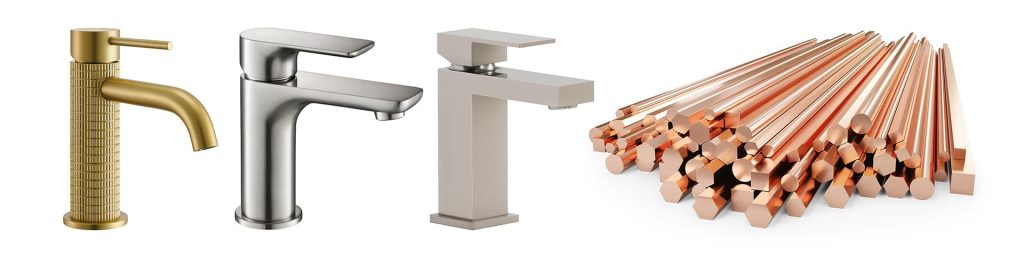
Explanation of Bathroom Product Finishing Processes
2026-02-04
In bathroom products, the finish process not only determines the appearance but is also a core factor affecting the product's corrosion resistance, wear resistance, stain resistance, and lifespan. From an engineering perspective, different finish processes are essentially different "surface structure systems," and their performance differences stem from materials, thickness, and process control methods.
This article will systematically analyze mainstream finish processes and compare them from structural, performance, and application perspectives.
This article will systematically analyze mainstream finish processes and compare them from structural, performance, and application perspectives.
I. Electroplating Process System
Electroplating is the most widely used metal surface treatment method in the bathroom industry. Its essence is a multi-layered metal deposition structure.
1. Electroplating Structure Composition
A typical electroplating system consists of the following layers (the specific combination is adjusted according to product design):
| Layer | Common Materials | Main Function |
| Base Material | Brass / Stainless Steel | Provides structural foundation |
| Pretreatment | Activation layer | Improves adhesion |
| Nickel Layer (Ni) | Semi-bright nickel / Bright nickel | Core anti-corrosion layer |
| Surface Layer | Chromium (Cr) or other metal layer | Appearance and wear resistance |
2. Nickel Layer Structure Design
The nickel layer is the most critical functional layer in the electroplating system, and its structural design directly affects corrosion resistance.
| Structure Type | Composition | Engineering Characteristics |
| Single Nickel | Single nickel layer | Simple process |
| Double Nickel | Semi-bright nickel + bright nickel | Improved corrosion resistance |
| Multi-layer Nickel | Multi-layer functional nickel | Suitable for demanding environments |
II. Electrophoretic Coating
Electrophoresis is a process that uses an electric field to deposit coatings onto a metal surface, forming a uniform organic protective film.
1. Process Structure
| Layer | Description |
| Substrate | Metal |
| Electrophoretic Layer | Organic Coating (approx. 10–30 μm) |
2. Process Characteristics
Uniform coating, suitable for complex structures
Strong coverage (including internal cavities)
Primarily used for corrosion protection
3. Performance Analysis
Dimension Performance
Corrosion Resistance: High
Appearance: Average
Adhesion: Strong
Application: Functional protective layer
Dimension Performance
Corrosion Resistance: High
Appearance: Average
Adhesion: Strong
Application: Functional protective layer
III. Liquid Coating Process
Liquid coating is an important way to achieve diverse appearances by forming a surface coating using liquid paint.
1. Process Structure
| Layer | Description |
| Substrate | Metal |
| Primer | Improves adhesion |
| Topcoat | Provides color and effect |
| Clearcoat (Optional) | Enhances abrasion resistance and protection |
2. Process Characteristics
Can achieve a variety of colors and textures
Suitable for design-oriented products
3. Performance Analysis
| Dimension | Performance |
| Appearance | High |
| Abrasion Resistance | Low |
| Corrosion Resistance | Medium |
| Risk | Easily scratched, paint peeling |
IV. Powder Coating Process
Powder coating involves electrostatically adsorbing powder and curing it at high temperature to form a coating.
1. Process Structure
| Layer | Description |
| Substrate | Metal |
| Powder Coating | 60–120 μm |
2. Process Characteristics
Thicker Coating
Strong Coverage
3. Performance Analysis
| Dimension | Performance |
| Corrosion Resistance | High |
| Impact Resistance | High |
| Surface Finish | General |
| Application | Engineering Products |
V. PVD Process System (Physical Vapor Deposition)
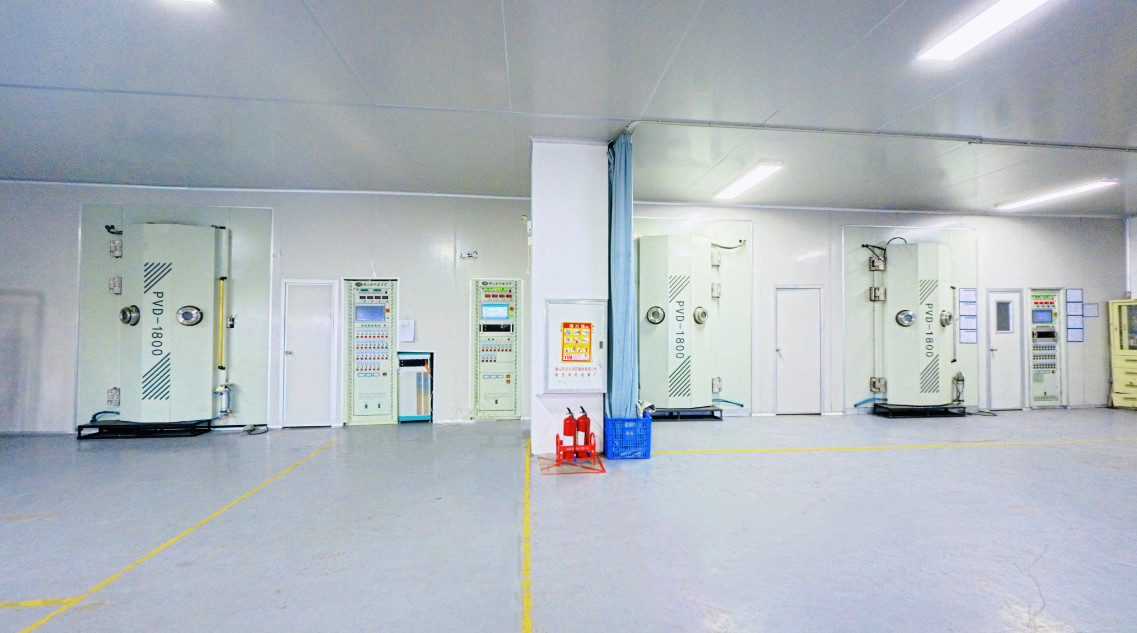
PVD is a surface treatment technology that forms a high-density coating in a vacuum environment, widely used in high-end bathroom products.
1. Process Structure
PVD is typically applied after metal substrate treatment:
| Layer | Description |
| Substrate | Brass / Stainless Steel |
| Bottom Layer | Metal substrate treatment layer |
| PVD Layer | High-density metal compound coating |
2. Process Characteristics
High coating density
Strong adhesion
Excellent surface stability
3. Performance Analysis
| Dimension | Performance |
| Abrasion resistance | High |
| Corrosion resistance | High |
| Color stability | High |
| Cost Relatively | High |
4. Common Application Effects
Gunmetal
Brushed Gold
Brushed Rose Gold
Brushed Bronze
Brushed Brass
Brushed Nickel
......
VIII. Conclusion
Surface finishing processes in bathroom products are not merely aesthetic treatments, but also crucial engineering systems that determine product performance. Different processes have distinct characteristics in terms of structure, performance, and application scenarios, requiring rational selection based on product positioning and market demand.
As an OEM and ODM manufacturer specializing in bathroom products, Rainparty possesses capabilities in various surface finishing processes, including electroplating, electrophoresis, spraying, and PVD, and can optimize and combine these processes according to different product requirements.
Furthermore, Rainparty owns its own PVD production workshop, enabling integrated control from substrate treatment to PVD surface coating. This provides significant advantages in color stability, wear resistance, and product consistency, enabling Rainparty to offer stable and reliable high-quality surface finishing solutions to global customers.
Salt Spray Testing for Bathroom Products Understanding NSS and ASS
A Comprehensive Analysis of the Bathroom Faucet Manufacturing Process